Photo of James Aquilina

James has extensive practice experience in all aspects of U.S. intellectual property law and regularly counsels clients in the areas of utility and design patent, trademark, copyright, and trade secret law, with emphases on rights procurement, portfolio development and management, rights enforcement, and licensing.

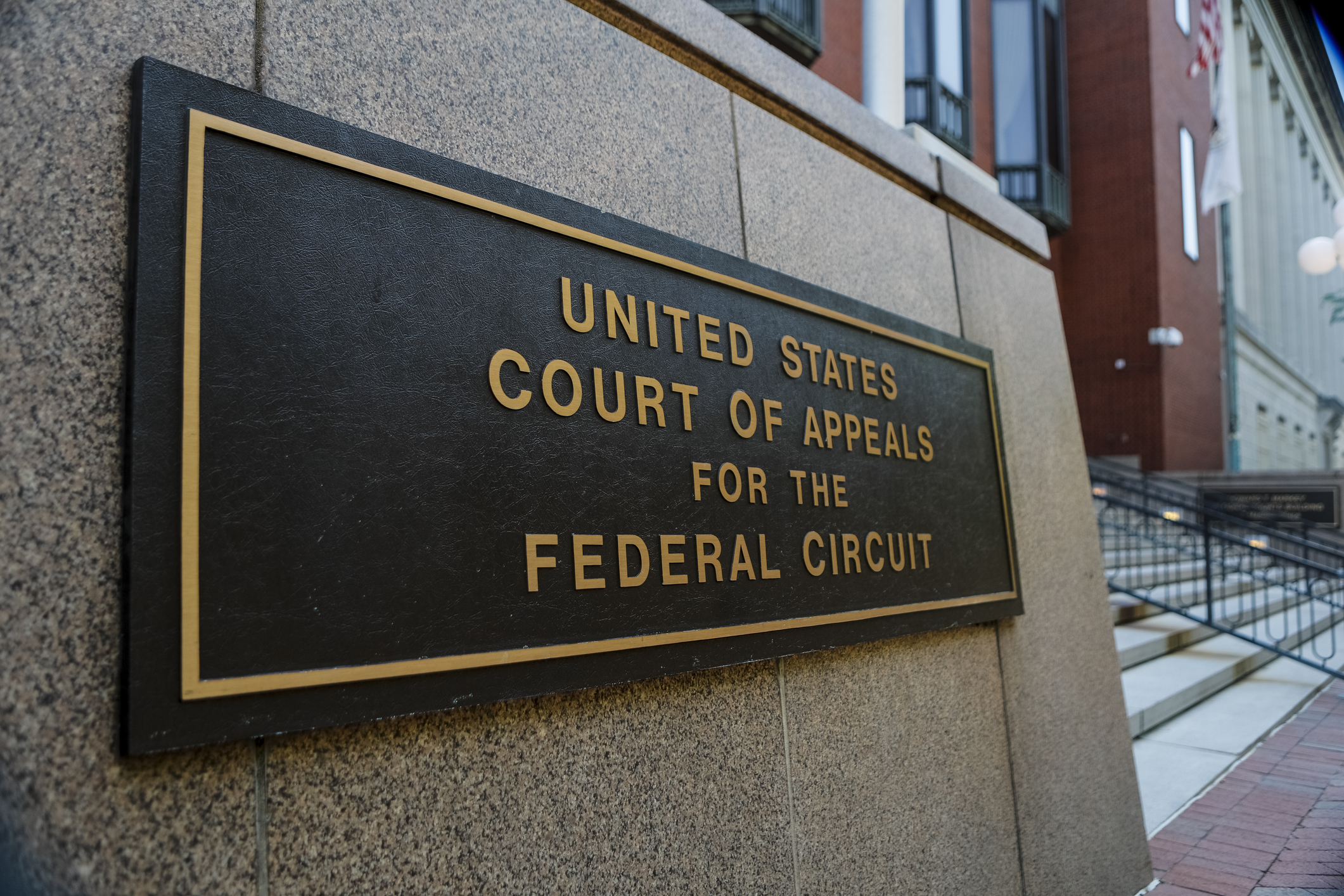
The U.S. Court of Appeals for the Federal Circuit’s recent decision in Range of Motion Products v. Armaid is another reminder that, if care is not taken, design patent scope can be narrowed significantly in the U.S. through functionality analysis—often at the claim construction stage—and even result in summary judgment of non-infringement. Continue Reading When “Functionality” Swallows Design Rights: A Caution for Design Patent Applicants

For many product-focused companies, design often is the product.  Differentiation lives in surface ornamentation, overall look-and-feel, and visual details that drive purchasing decisions often long before utility is evaluated.  Against that backdrop, many brands are reexamining copyright law as a faster, more flexible tool for protecting product aesthetics.Continue Reading The Growing Role of Copyright in Product Design Protection

The U.S. Patent and Trademark Office (USPTO) has announced the rollout of DesignVision, an advanced AI‑powered image search tool now integrated into the examination system for U.S. design patent applications. According to the Official Gazette notice published July 16, 2025, DesignVision enables examiners to perform federated searches of U.S. and foreign industrial design and trademark databases—spanning over 80 registers—using only image inputs. Results are ranked by visual similarity, allowing faster and more precise prior art discovery. The notice clarifies that this tool is intended to augment existing textual search methods, not replace them.Continue Reading AI Search Tool Coming to Design Patent Examination

The Manual of Patent Examining Procedure (“MPEP”) is the examination manual used internally at the United States Patent & Trademark Office (“USPTO”) to guide examiners in the process of examining patent applications. In practice, patent applicants frequently rely on the contents of the MPEP during patent prosecution to guide their arguments and hold examiners accountable to their legal obligations during patent examination.Continue Reading Recent Examination Manual Update Includes Guidance on Protection of Computer-Generated Designs

While obtaining a design patent is often quicker than obtaining a utility patent, current design patent application pendency is often still a lengthy period of time. Based on data released by the USPTO in July 2024 and shown below, over the previous year the average length of time from a design application filing date to the date that a first Office action was mailed was 16.7 months (Figure 1, below). In the month of July 2024, that average had crept up to 17.1 months. In the consumer product space especially, given the sometimes short shelf-life of a product, such a long examination pendency may not be suitable for a design patent applicant.Continue Reading Rocket Docket: Fast Track to Examination

As commerce moves more and more online, companies are facing unique challenges with respect to protecting their products, and the low cost of entry for online sellers has contributed to proliferations of knock-off and potentially counterfeit products being sold. This is particularly true when the product being sold is a simple disposable or replaceable product, such as a refill cartridge, a duster refill or a coffee pod.Continue Reading Indispensable Strategies for Protecting Disposable Products

Upending decades of continuity in the world of design patents, the United States Court of Appeals for the Federal Circuit (“CAFC”), sitting en banc in LKQ Corporation v. GM Global Technology Operations LLC, overturned the Rosen/Durling standard for obviousness of design patents, originally set forth in In re Rosen, 673 F.2d 388, 391 (C.C.P.A. 1982) and further refined in Durling v. Spectrum Furniture Co., 101 F.3d 100, 103 (Fed. Cir. 1996), to align the test for obviousness for design patents with the U.S. Supreme Court precedent for utility patents originally set forth in Graham v. John Deere Co., 383 U.S. 1 (1966) and refined in KSR Int’l Co. v. Teleflex Inc., 550 U.S. 398, 419 (2007).  In so doing, the CAFC outlined the new framework by which design patent obviousness is to be determined at the United States Patent & Trademark Office (“USPTO”) during examination and post-grant proceedings, as well as during district court litigation involving infringement or invalidity challenges of design patents.Continue Reading R.I.P. Mr. Rosen: Federal Circuit Upends Longstanding Design Patent Obviousness Test

Quarles & Brady Partner and editor-in-chief of the firm’s Protecting the Product design rights blog, James Aquilina, Partner Michael Piery, Associate Rachel Ackerman, and patent professionals Harrison Powell and Audrey Jacobson attended the 17th Annual USPTO Design Day on May 9, 2024 at the USPTO’s Headquarters in Alexandria, Virginia.Continue Reading RECAP – 17th Annual USPTO Design Day

The beauty industry is ever changing, and makeup trends and viral product releases can drastically increase a company’s profits.  However, without proper legal protection, competitors can quickly replicate a product, eating into those profits. 

In this post, we will address how design patents and trade dress can be employed to provide protection for various beauty-related tools and products.Continue Reading Protecting the Product: Beauty Products